
You spend more hours on a keyboard than almost anyone else. The best keyboard for programming is the one that keeps your hands comfortable through a long session and lets you put brackets, arrows and shortcuts where your fingers already are. This guide covers seven mechanical keyboards for programmers and what each one is good at.
What Makes a Good Keyboard for Programming?
Here's what to look at before you pick a board:
- Remapping: QMK and VIA let you change what any key does, add layers, and record macros. Put arrows on a home-row layer, move Escape, or bind a key to your build command. Every Keychron board below runs QMK.
- Ergonomics: If your wrists or shoulders ache after a long day, an Alice layout or a split board lets your hands sit at a more natural angle. A wrist rest helps too.
- Layout: A 75% keeps the arrows and function row in a small footprint, which suits most coding. A 96% keeps the number pad. A split board takes up more desk but lets you set the width yourself.
- Switches: Linear switches are smooth from top to bottom. Tactile switches have a bump you can feel, which tells you the key registered without bottoming out. Hot-swap sockets let you change your mind later without soldering.
- Connectivity: Tri-mode boards connect over 2.4 GHz, Bluetooth and a cable. Bluetooth makes it easy to switch between a work laptop and a personal one.
- Mac support: If you code on a Mac, look for a board with Mac keycaps and a Mac/Windows switch so Command and Option sit where you expect.
The Best Mechanical Keyboards for Programmers
1. Keychron V1 Max: The All-Rounder
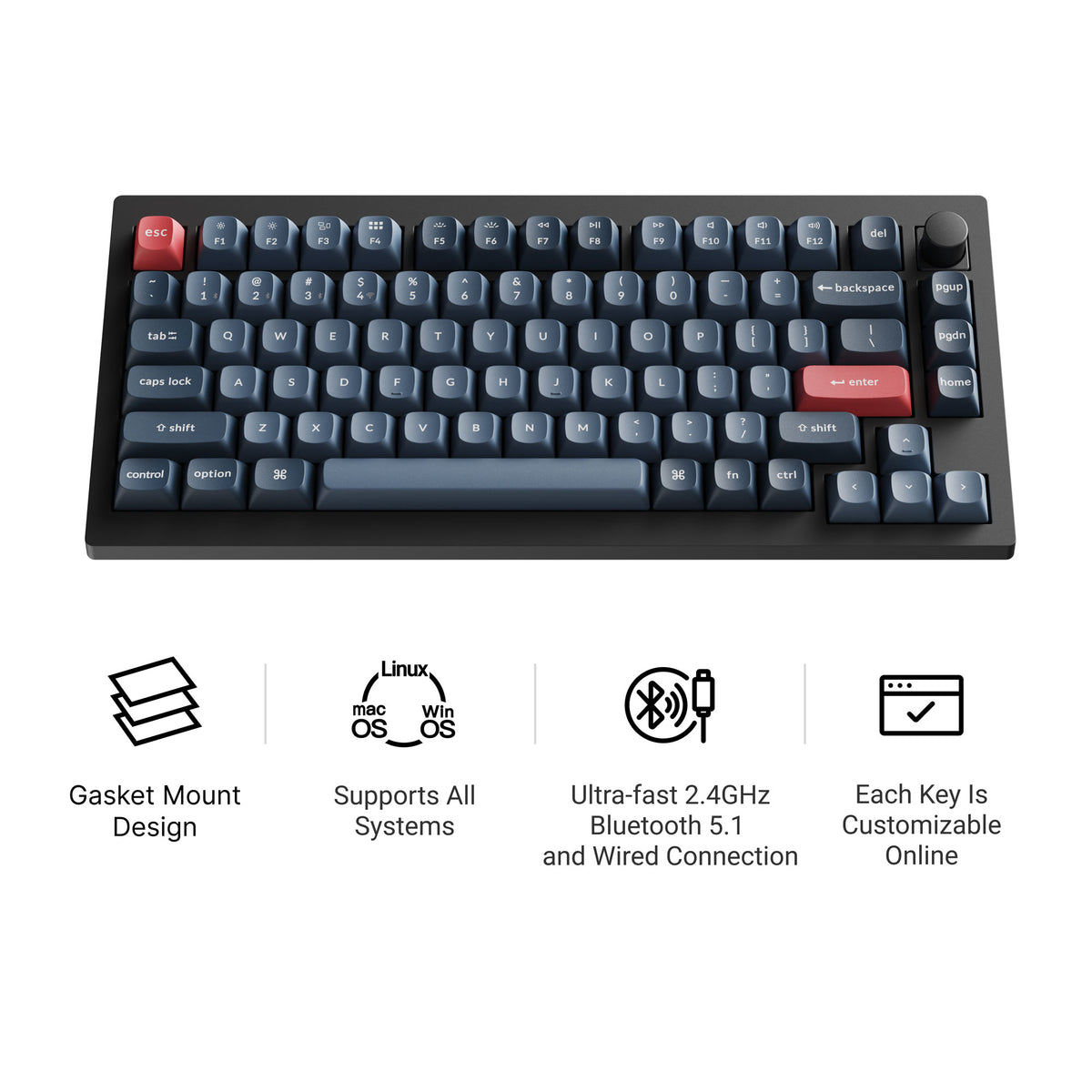
The Keychron V1 Max is a 75% hot-swappable board with a rotary knob. It connects over 2.4 GHz, Bluetooth or a cable, runs QMK firmware and works with VIA and Keychron's Launcher web app, so remapping takes a few minutes in a browser. Keychron lists a gasket mount, a PC plate, south-facing RGB and screw-in PCB stabilizers. The knob is handy for volume, scrolling a long file, or zooming in and out. On November 19 the assembled versions were in stock at Keychron; the barebone was backordered. Our Keychron V1 Max guide covers the full specs.
Pros:
- QMK/VIA remapping out of the box
- Rotary knob
- Tri-mode connectivity
- Hot-swap sockets
Cons:
- ABS plastic case, not aluminum
2. Keychron Q11: A True Split Board
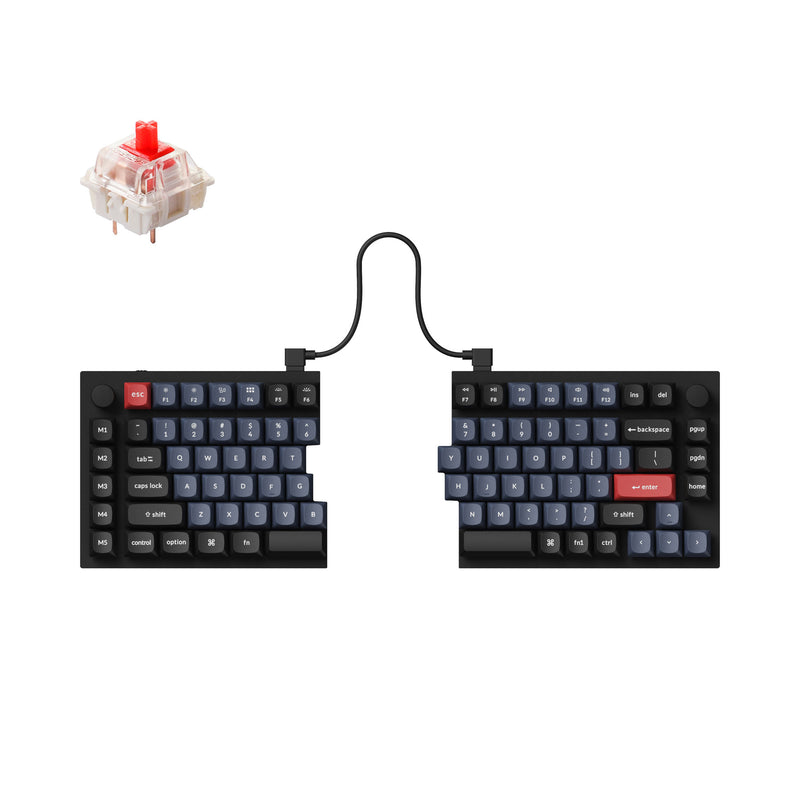
The Keychron Q11 is a split 75%: two separate aluminum halves joined by a TRRS cable. You place each half at shoulder width and angle them to match your wrists, which is the biggest ergonomic change you can make without moving to a columnar layout. It runs QMK/VIA, has hot-swap sockets and double-shot OSA PBT keycaps, and comes with an optional knob on the right half. It's wired only. On November 19 some fully assembled versions were in stock at Keychron, while the barebone was sold out. See our split keyboard guide for more options.
Pros:
- Real separation between the halves
- Aluminum case
- QMK/VIA, so the split layout can be remapped freely
Cons:
- Wired only
- Takes a week or two to get used to
3. Keychron Q8 Max: Alice Layout Without the Learning Curve
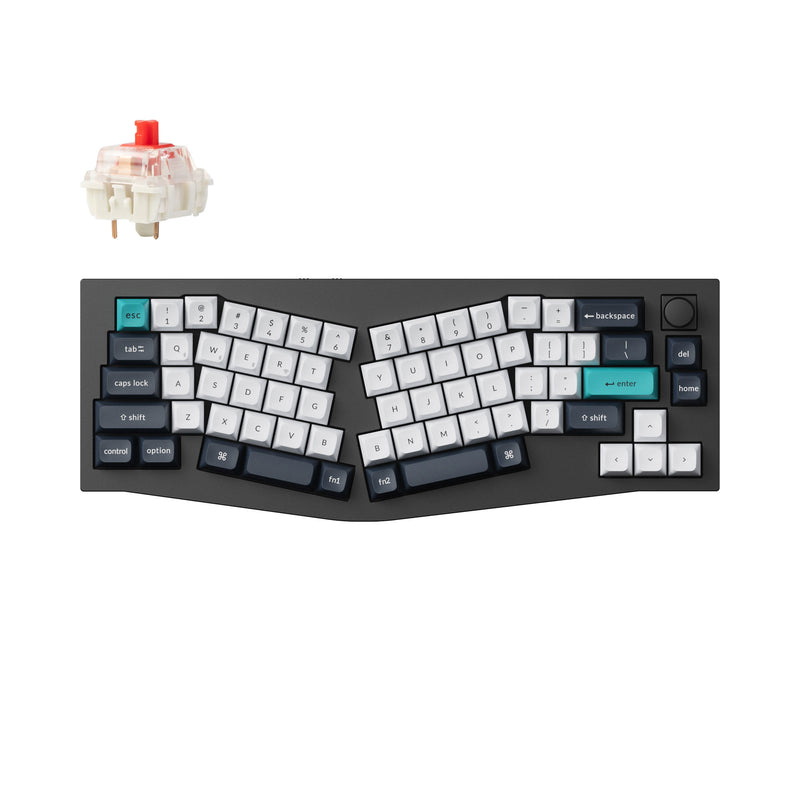
The Keychron Q8 Max uses the Alice layout. The alpha keys are split down the middle and angled, so your wrists stay straighter, but it's still one board and your muscle memory mostly carries over. It's a 65% with a full aluminum gasket-mount case, tri-mode wireless, QMK/VIA remapping, hot-swap south-facing sockets and double-shot PBT keycaps. On November 19 nearly every version was in stock at Keychron; only the Shell White barebone was out. Our Alice keyboards page compares it with other Alice boards.
Pros:
- Angled alphas for a more natural wrist position
- Aluminum gasket-mount case
- Tri-mode wireless and QMK/VIA
Cons:
- 65% means no function row; you reach F-keys through a layer
- Heavy to carry around
4. Keychron K2 Max: For Coding on a Mac
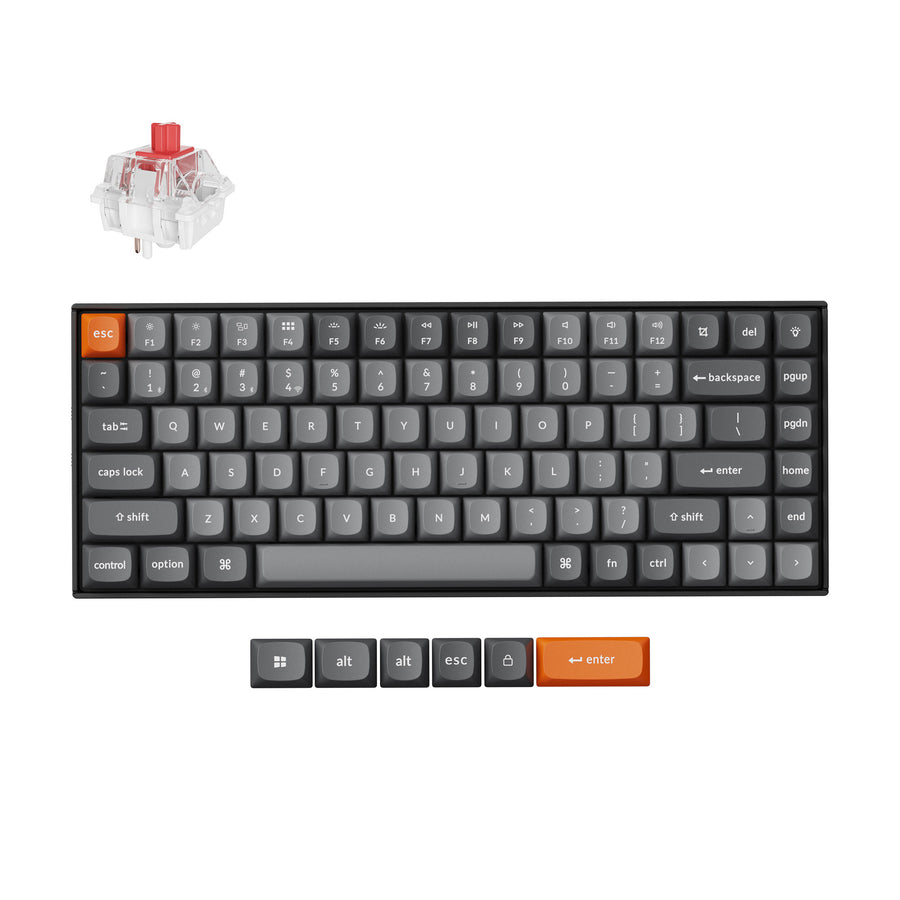
The Keychron K2 Max is a 75% tri-mode keyboard that connects over 2.4 GHz, Bluetooth, or USB-C and ships with keycaps for both Windows and macOS, so Command and Option are labeled correctly out of the box. It supports QMK/VIA, remaps through the Keychron Launcher web app, has RGB backlighting, and comes in hot-swappable versions with an optional aluminum frame. About half its versions were in stock at Keychron on November 19. More Mac options are in our mechanical keyboard for Mac guide.
Pros:
- Mac and Windows keycaps in the box
- QMK/VIA remapping
- Tri-mode connectivity
Cons:
- Taller profile than a low-profile board, so a wrist rest helps
5. Keychron K2 HE: If You Also Game
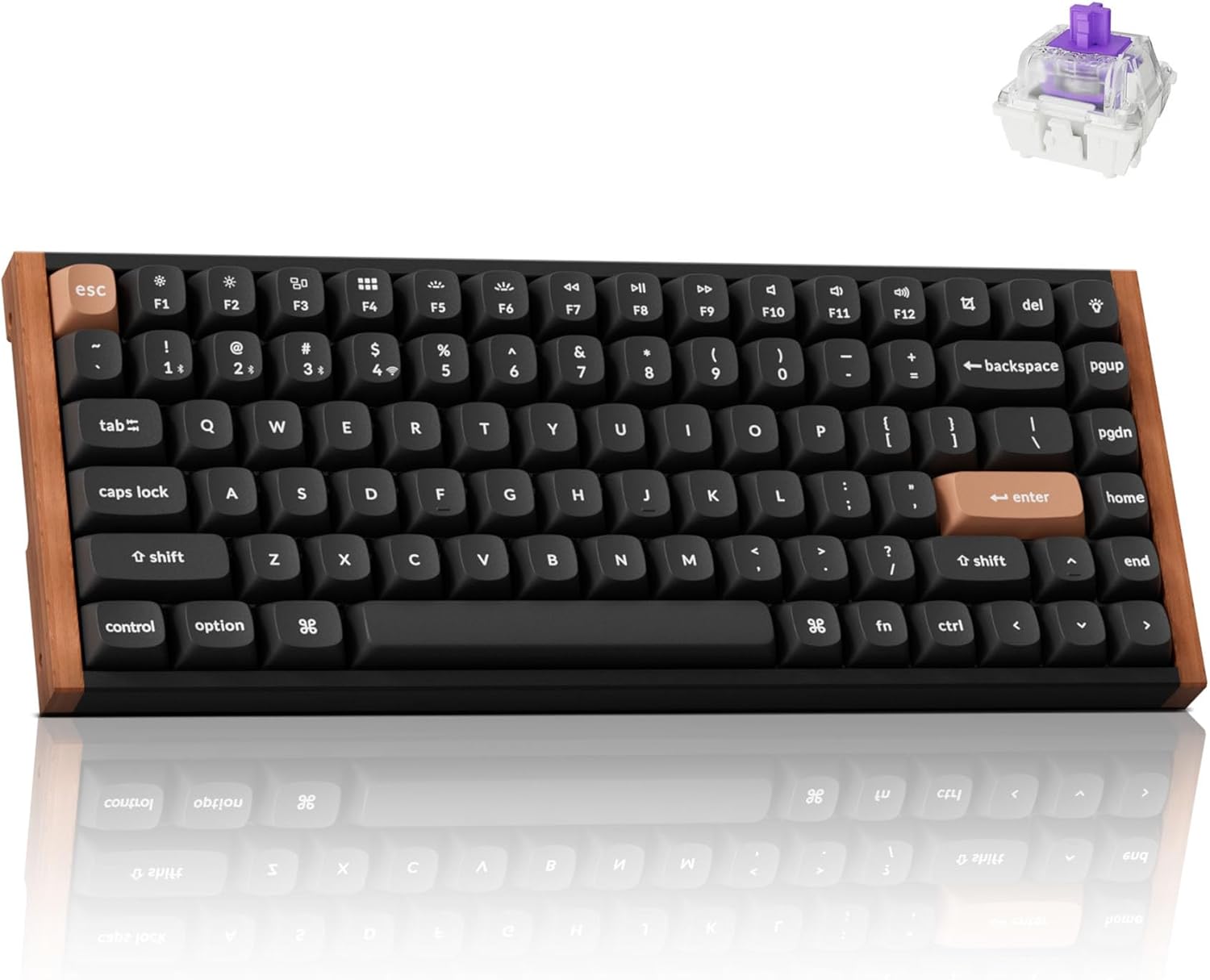
The Keychron K2 HE uses Gateron double-rail magnetic switches, so you set the actuation point anywhere from 0.2 to 3.8 mm and can turn on Rapid Trigger, which resets a key the moment you start lifting it. For coding, a shallow actuation point means less travel per key. For gaming after work, Rapid Trigger is the main draw. It's a 75% board with an aluminum build, tri-mode connectivity and QMK/VIA support.
Pros:
- Adjustable actuation on every key
- Rapid Trigger for games
- Tri-mode connectivity and QMK/VIA
Cons:
- Costs more than the K2 Max
- Magnetic switches feel different from standard mechanical switches
6. AULA F99: Keeps the Number Pad
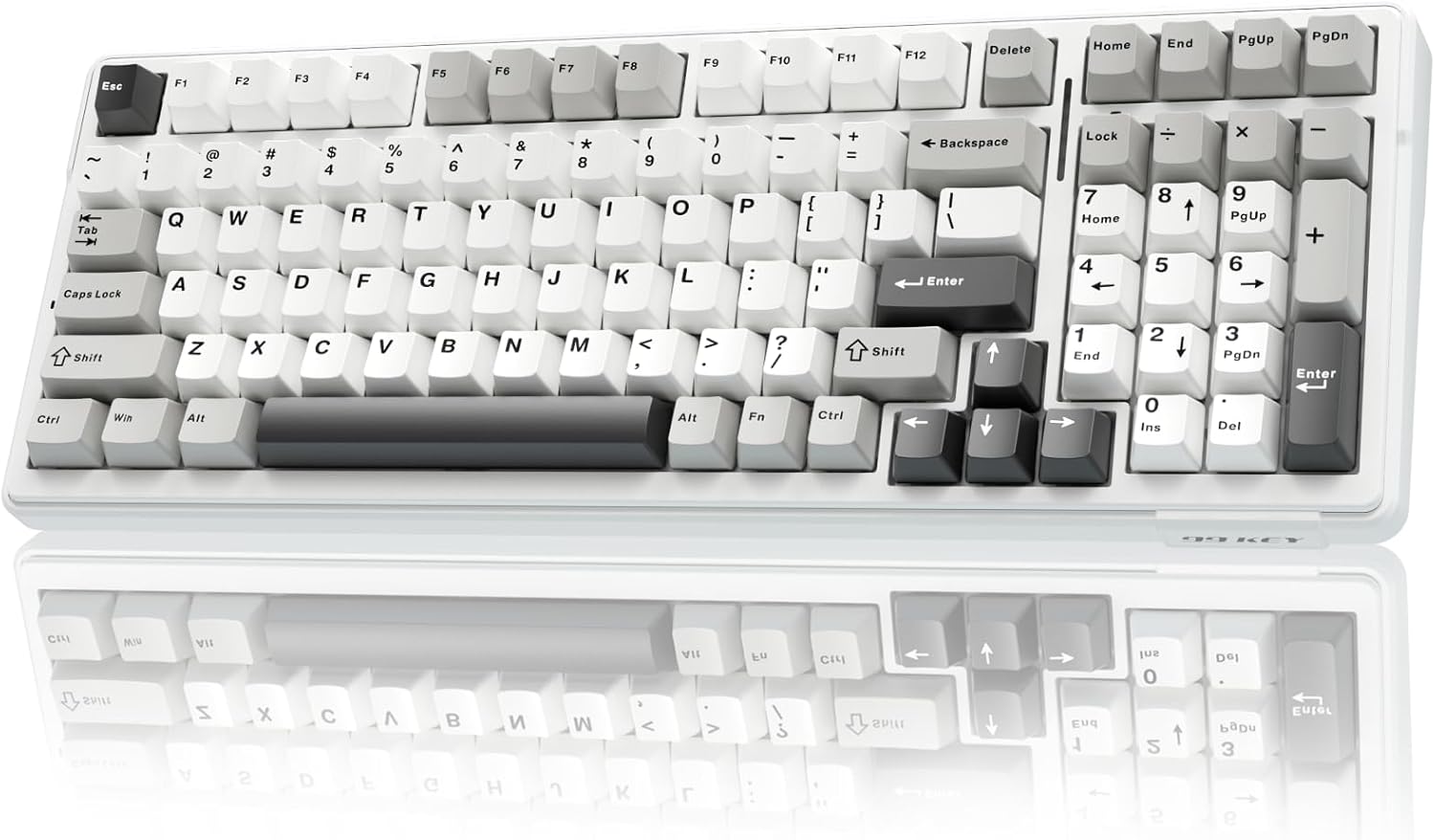
The AULA F99 is a 96% keyboard: it keeps the number pad but packs it in tighter than a full-size board. That matters if you work with data, spreadsheets or a lot of numeric input. It has tri-mode connectivity, an 8000mAh battery, a gasket-mounted structure, five layers of sound dampening, pre-lubed linear switches, hot-swap sockets and per-key RGB. Read more about the layout in our 96% keyboard guide.
Pros:
- Number pad in a smaller footprint
- Long battery life
- Quiet, dampened sound
- Hot-swap sockets
Cons:
- The compressed 96% layout takes some getting used to
- AULA's remapping software is basic next to QMK/VIA
7. WOBKEY Rainy 75: For a Quiet Desk
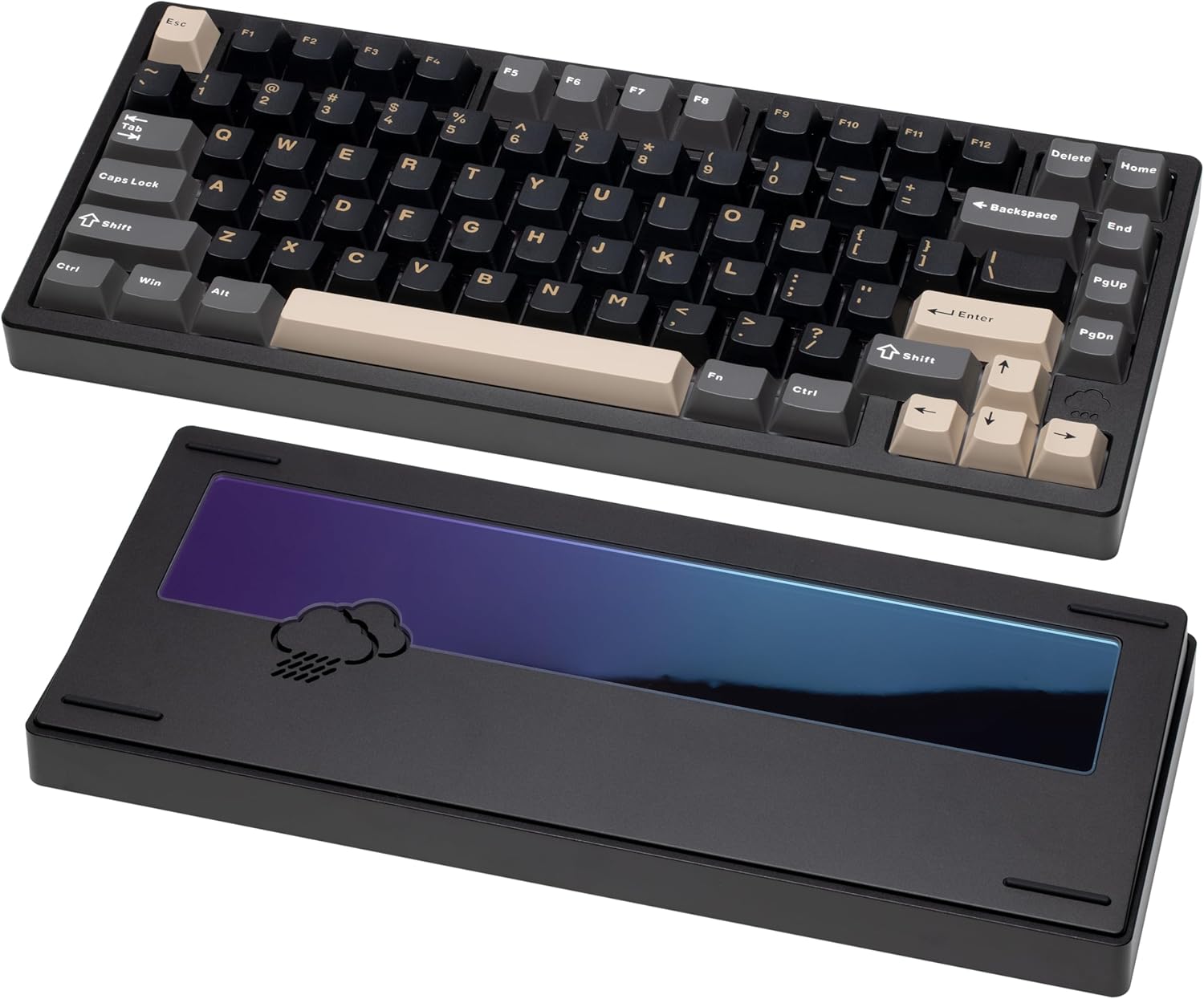
The WOBKEY Rainy 75 has a solid aluminum case, five-layer acoustic dampening and a gasket-mounted design, so keystrokes are soft and quiet. That's useful on calls or in a shared office. Tri-mode connectivity and hot-swap sockets round it out. Our WOBKEY Rainy 75 review goes into more detail.
Pros:
- Aluminum build
- Quiet, dampened sound
- Tri-mode connectivity
Cons:
- Higher price than the plastic boards here
- Plain look won't suit everyone
How to Choose a Mechanical Keyboard for Programming
- Start with your body. If you already have wrist or shoulder pain, look at the Q11 or the Q8 Max first. If you don't, a 75% like the V1 Max or K2 Max is the easy choice.
- Decide on remapping. If you want layers and macros, stick to a QMK/VIA board. All four Keychron boards with standard switches here qualify, and so does the K2 HE.
- Try switches before you commit. A tester like the Gateron Switch Tester V2 puts 35 linear, tactile and clicky switches side by side for a lot less than a full set. Our keyboard switch tester guide compares it with the other testers.
- Think about where you work. Bluetooth helps if you move between machines. If you're on calls all day, a dampened board like the Rainy 75 is easier on the people around you.
Final Thoughts
For most programmers, the Keychron V1 Max is the safe pick: QMK, a knob, three ways to connect, and a fair price. If comfort is the problem, go to the Q8 Max for a gentle change or the Q11 for a full split. Mac users should start with the K2 Max. Happy coding.